
Exploring shading techniques
Simple Shading
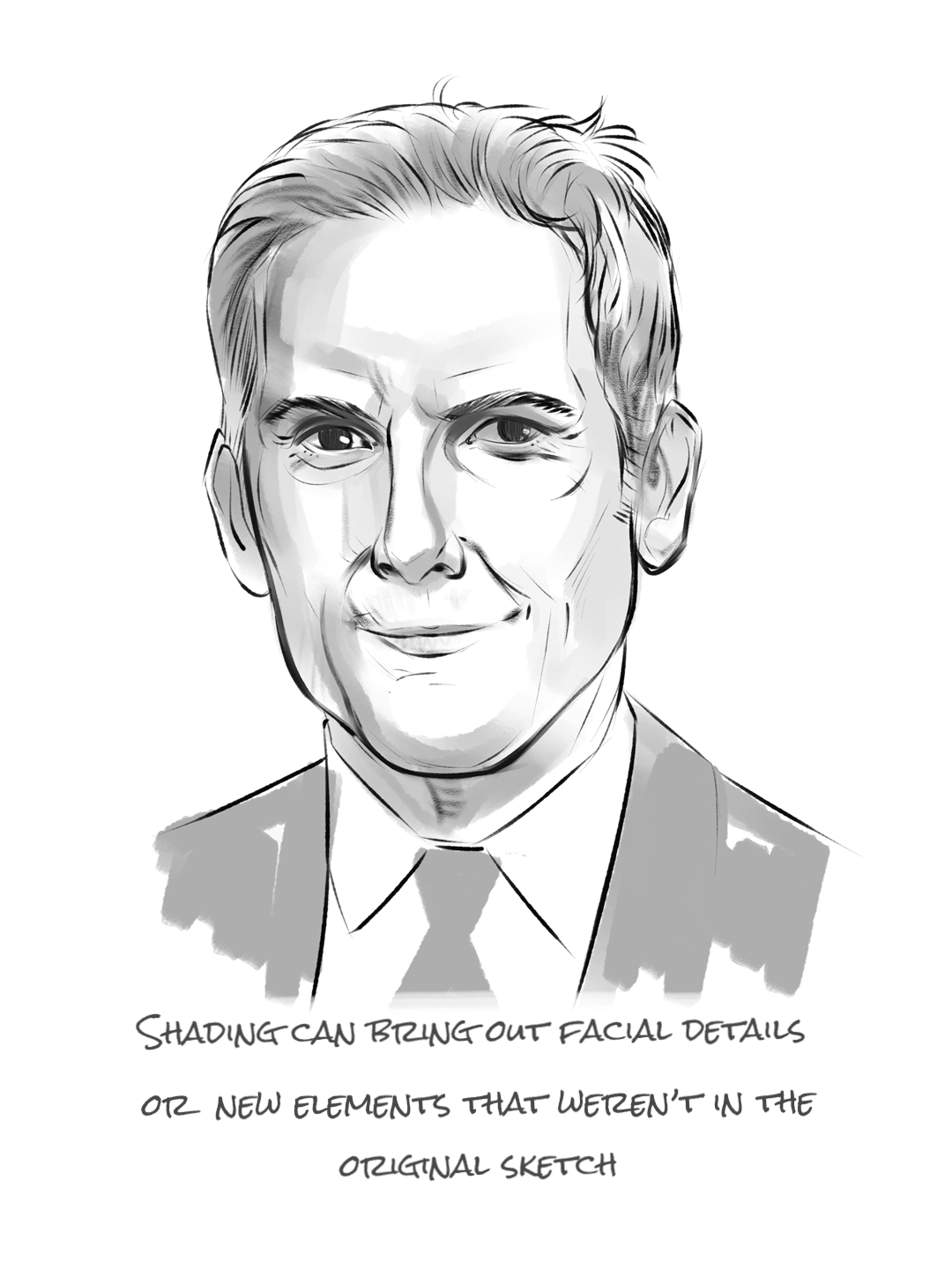
You can express a lot with even a small amount of shading. Simple shading can be very minimalistic, using spot shadows to bring out form, blocking out elements to define shapes, or serving as a vignette to draw focus.
You can use any type of brush that matches your desired style and texture. Just keep the brush opacity low so you do not overpower your line work.
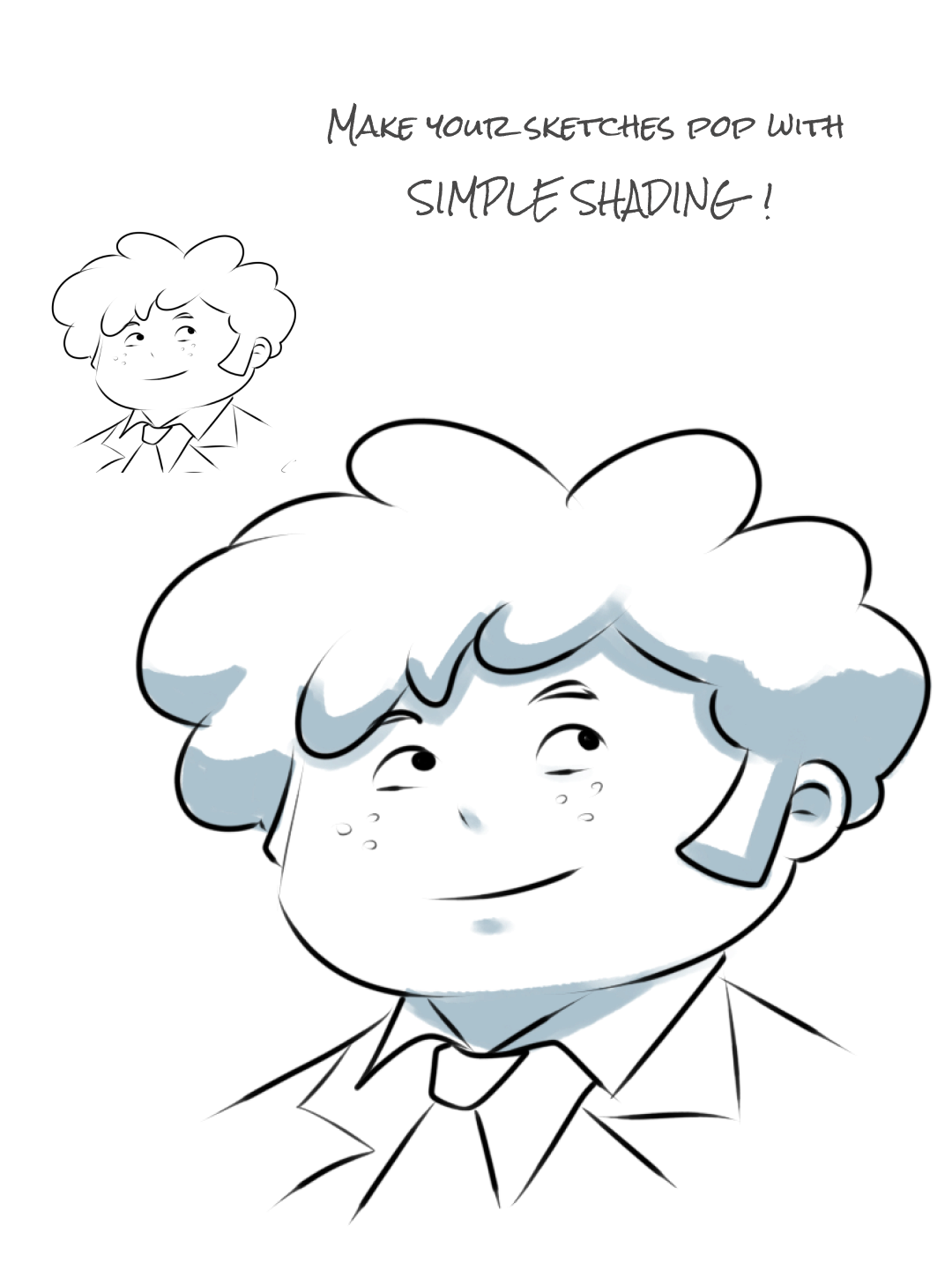
It doesn’t take much. Less Can be more!
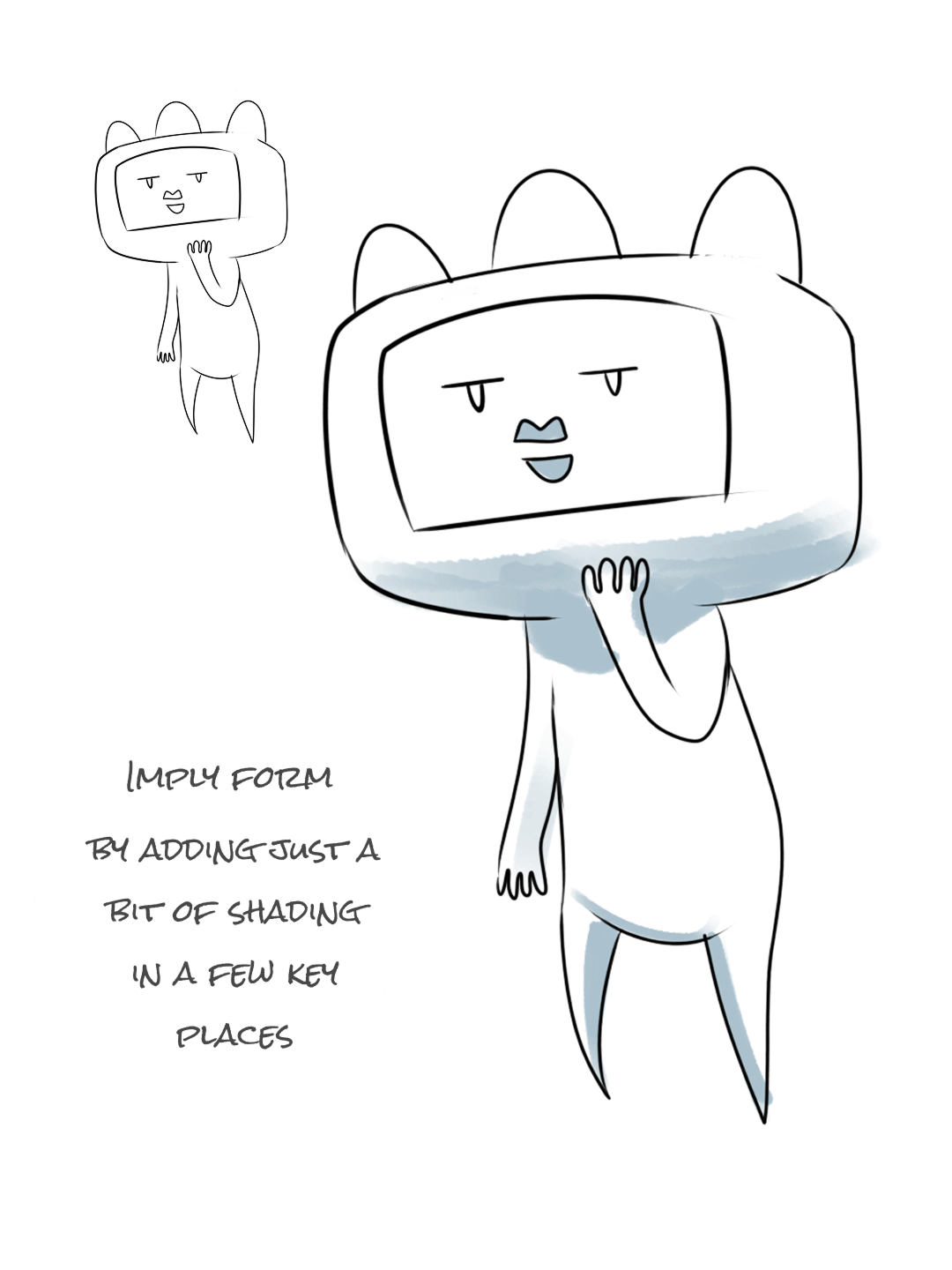
Have a basic lighting direction in mind so you can place your shadows consistently
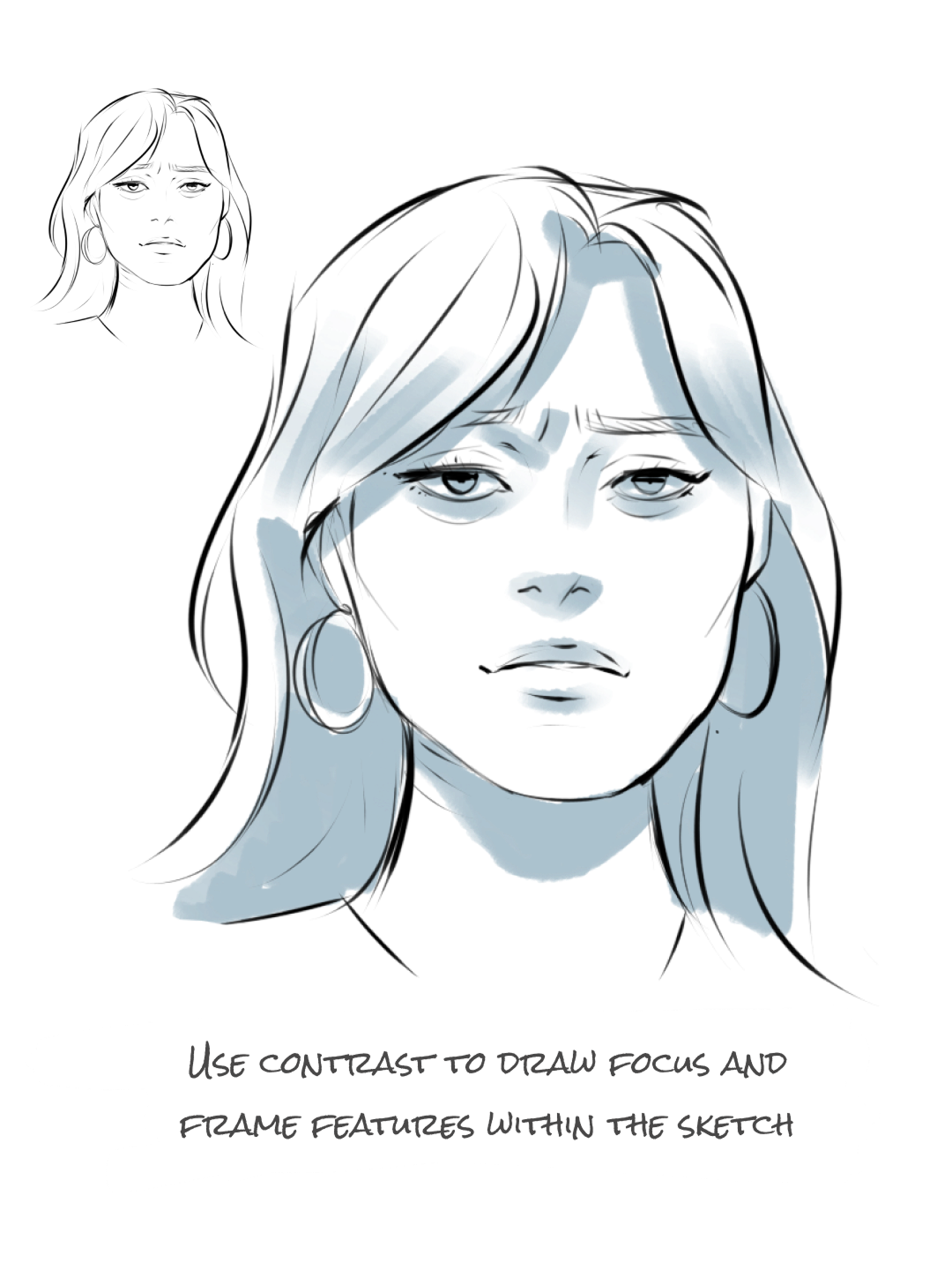
Here, the hair draws focus to the face.
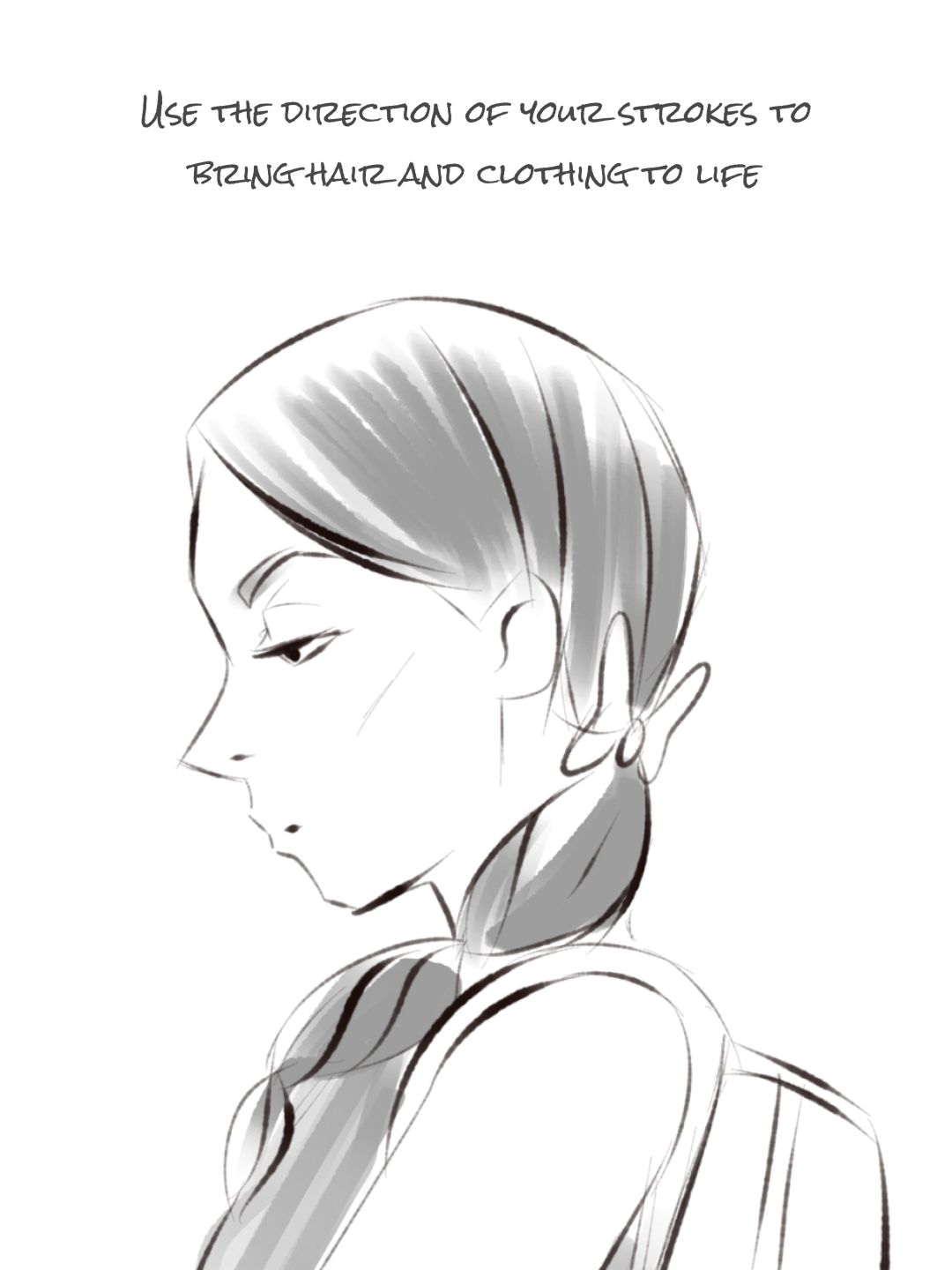
This grainy brush helps to imply the texture of the hair.
Use lighter colors and smaller brush sizes for subtle details
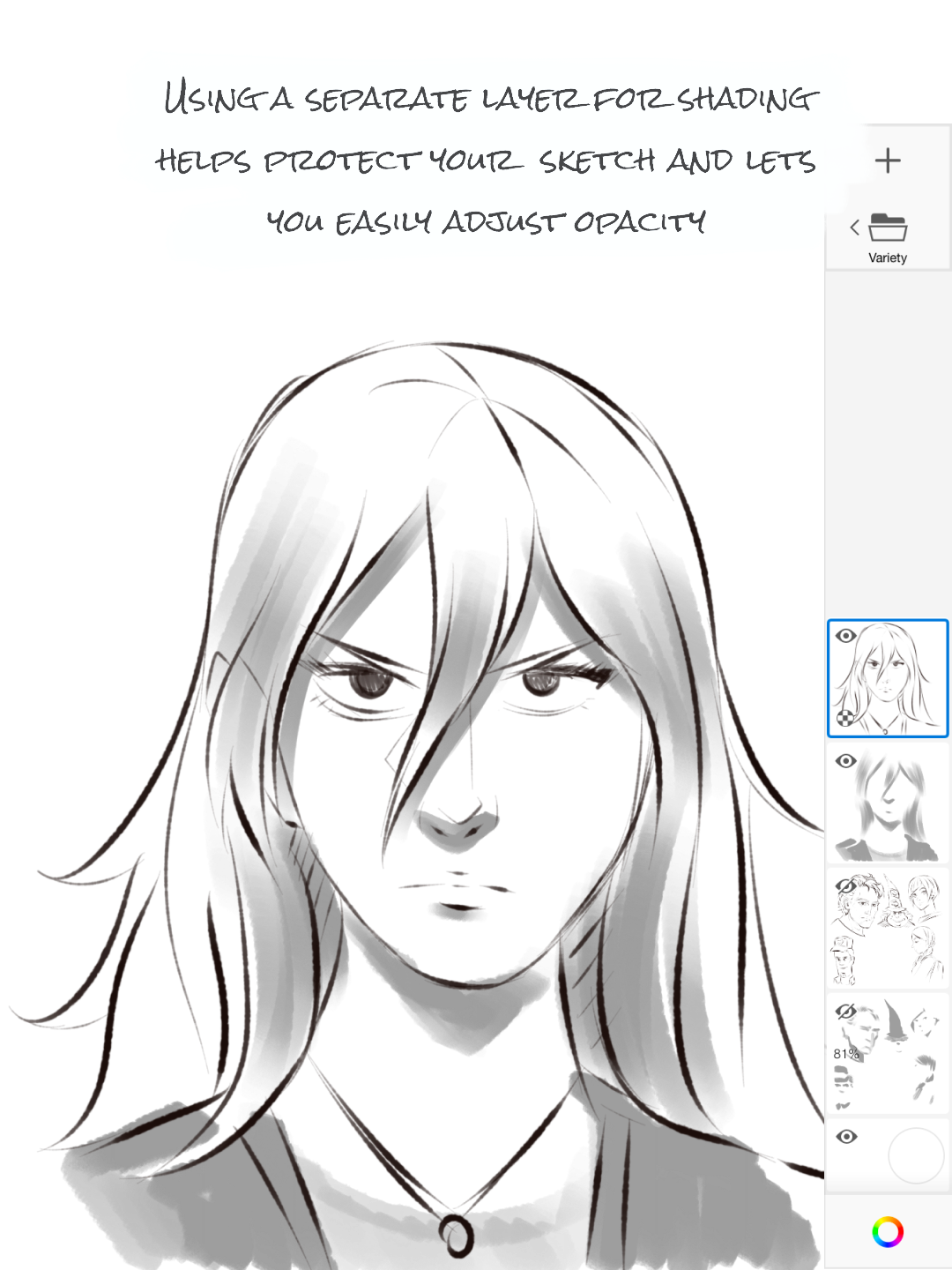
To keep your line work dominant, create layers below for shading and coloring.
Cel shading

Cel shading is an iconic style that uses clean, sharp blocks of solid color and shadow instead of smooth, blended shading.
This was an important technique for traditional animation, where artists hand-painted characters onto clear sheets of plastic called cels. Today, animators, digital artists and game designers use it to give their work this expressive and timeless cartoon look.
Monochromatic and analogous shading
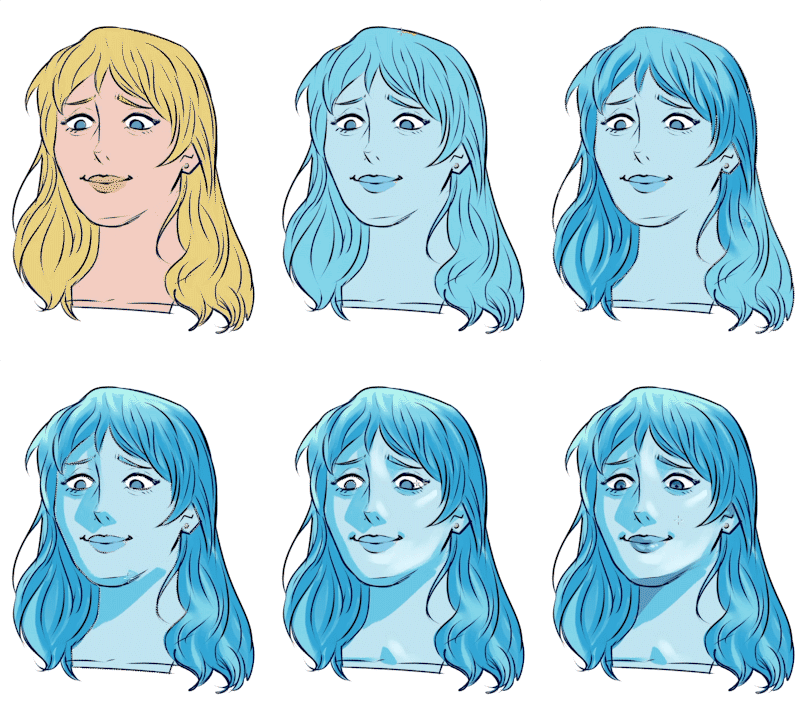
These shading techniques use a unified color family, either sticking to shades of a single color or blending three or four hues that sit right next to each other on the color wheel. This was an useful technique for building depth, atmosphere, and mood without relying on flat blacks or grays.
In Sketchbook you can use the color wheel or the color harmony options to quickly build your shading palette.
Tonal shading

Soft light shading is a coloring technique that uses smooth, gradual transitions between light and shadow to mimic how real-world lighting behaves.
This is a technique for achieving more realistic results, as it replicates how environmental light softly wraps around forms without hard edges.
Even when applied to stylized or cartoon artwork, this diffused style adds three-dimensional depth, making characters feel more realistic.
Summary
Even minimalistic shading can add depth to a simple sketch by implying form and detail.
Employ contrast strategically to draw the viewer's focus exactly where you want it.
Experiment with different shading techniques to achieve the style and level of realism you are after.