
Concept art is visual problem solving
When you hear 'concept art', you probably think of a game, film or television production, but other professions and industries use it too. It is a visual iteration process that provides a way to explore ideas and come to a decision that moves a project forward.
Everyone can appreciate concept art, but there's a lot more that goes into it besides the actual art itself. Concept art is taking the seed of an idea and exploring all the visual possibilities of what it could grow into. It's about defining style, setting a mood, and giving clarity to artists working downstream on a project so that they can bring it to life.
Planning & problem solving
A project starts with a brief that outlines the idea and requirements for the assignment. It’s the artist’s job to translate the brief into potential solutions with their artwork.
Doing a bit of homework before jumping into drawing is part of the thought process. It's like the old adage says: failing to plan is planning to fail. It's important to be well researched and informed about the subject you'll be drawing, especially when the subject matter is unfamiliar to you. Gathering visual references into an image board is always a great source of inspiration, too — you can't draw what you don't understand!
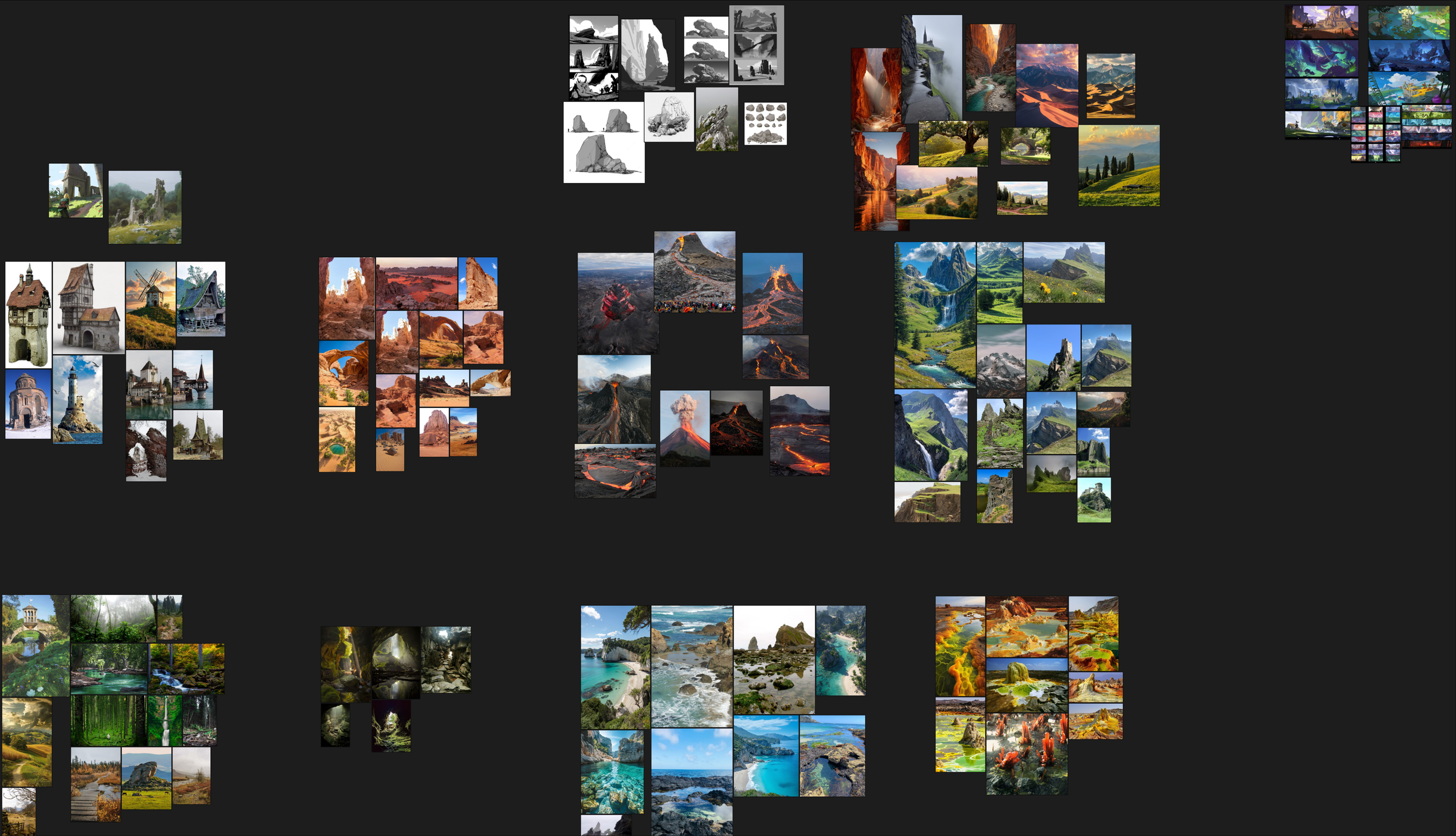
Image board: this project involved a floating city. To depict distinctly different concepts for the floating city the artist collected a variety of environmental imagery, such as volcanic landscapes, dry, airy deserts and mountainous wilderness. These reference images provided a wealth of visual information like color, lighting, textures, and overall mood of each biome.
Exploration
You’ll want to explore as many ideas as you can first. Rough sketches and thumbnail drawings help you work through and narrow down your ideas. Along the way you will come across some ideas that pop and work, and others that seemed worthwhile but don’t really land right. You’ll need to boil the concepts down to handful of proposals that you think best address the brief.
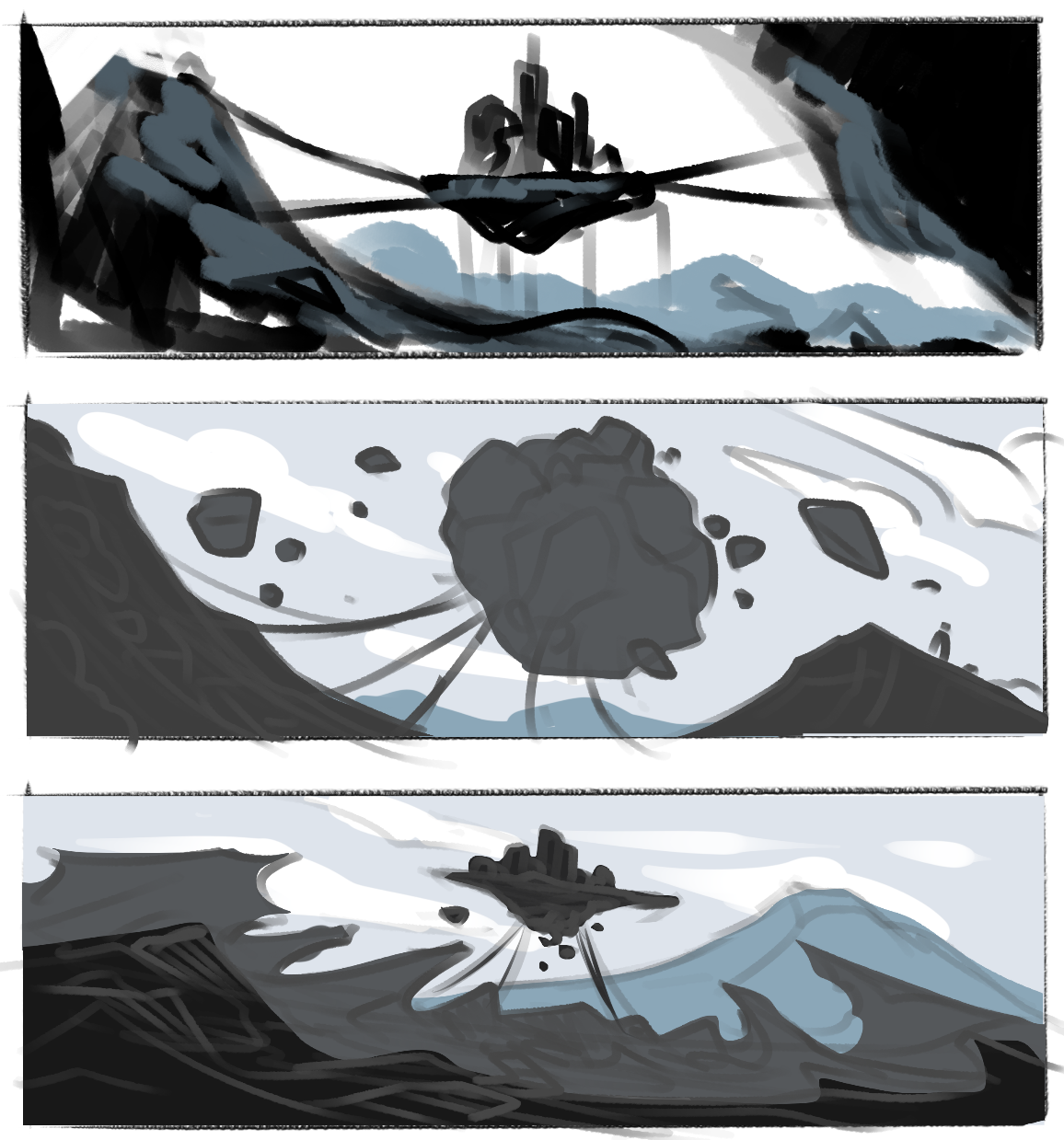
Initial roughs should focus on form, composition, and shape language. They should be loose and not overly detailed.
There's no perfect set number of concepts, but you do want to provide enough options to get the client engaged. That said, too many options may overwhelm the client, so even if you wind up doing 20 roughs presenting only 3-5 is ideal. The goal is to have enough options for some decisions to be made, but not so many that you induce choice paralysis.
Exploration tips
Be mindful of your time management and pace yourself to get everything you need done. Keep the main purpose of the concept in mind and prioritize the elements that support that. Don't worry about fleshing out details that aren't important to the overall goal of the piece.
Have a plan on how you’ll propose the concepts to the client. Each proposal should have the same format and level of detail. Avoid having one option that looks like you spent way more time on it than the others: be sure to give each option the same amount of attention.
Drawing tips
Keep your main subject as the focal point; don’t create distracting elements in areas you don't want the viewer to look at.
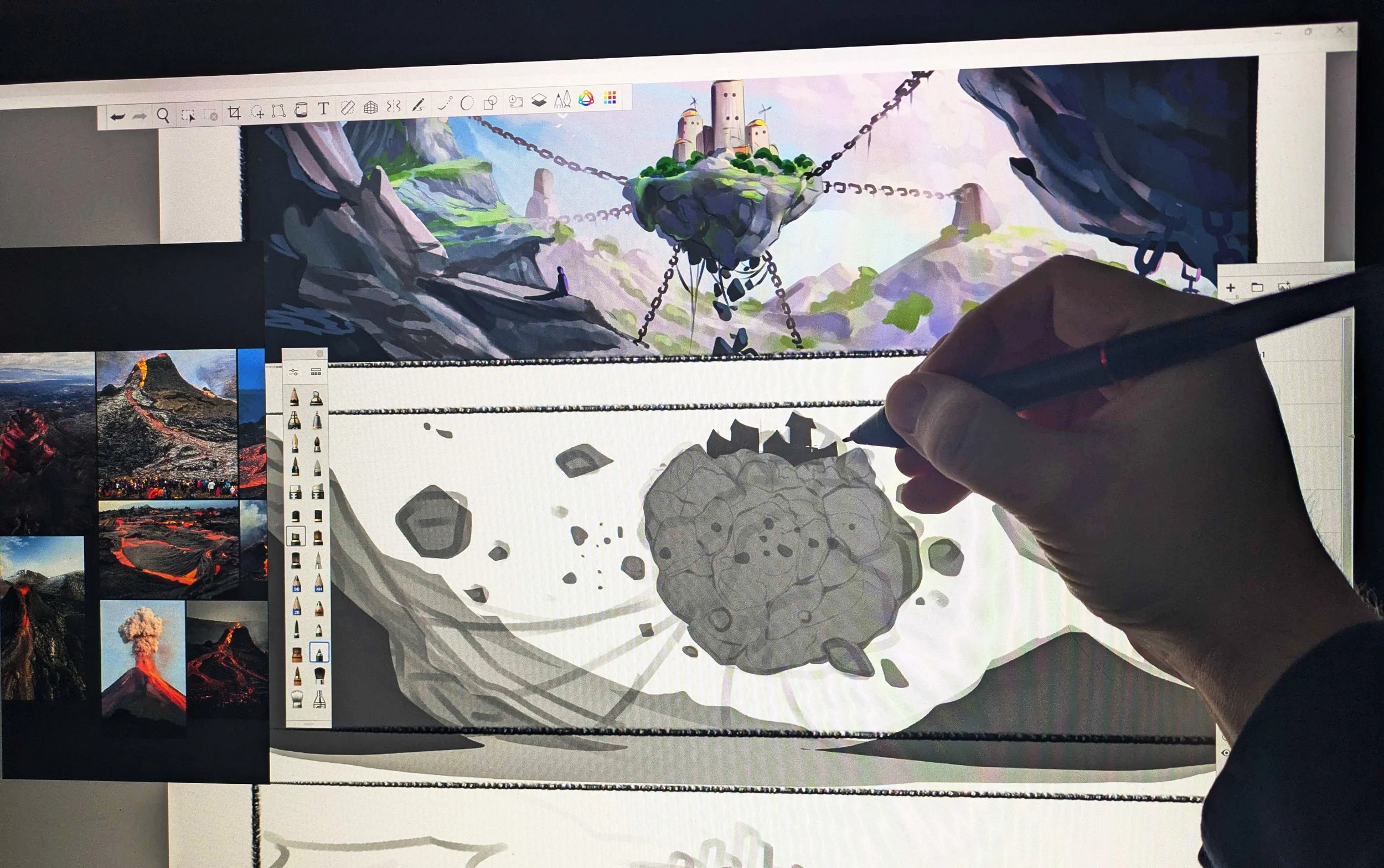
Work the contrast of your values. Use these to reinforce your eye flow & focal point. it's important to create a feeling of depth and set a clear sense of scale. This is normally done by having similar elements in the foreground, midground and background layers of a scene, at different sizes, to reinforce the scale and depth.
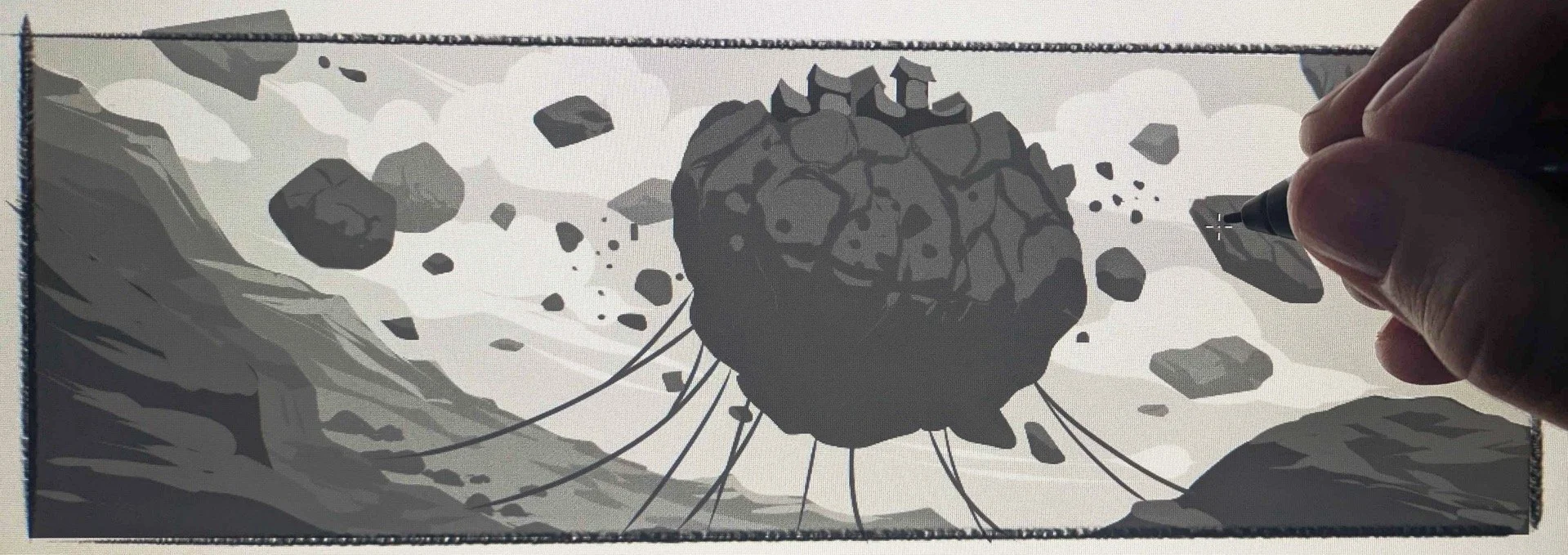
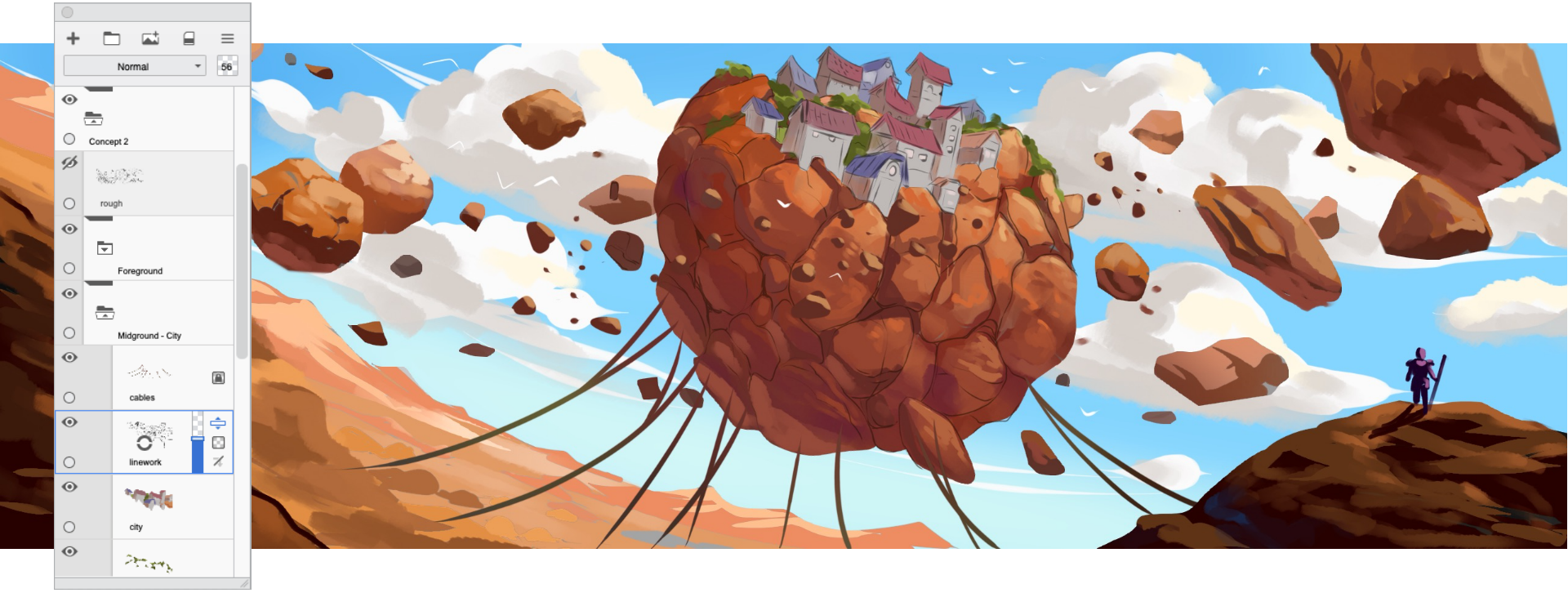
Keep your layers organized so it’s easy to navigate and make changes later. Iteration is part of the workflow, so you'll want to make editing as painless as possible.
Feedback and iteration
Concept art is all about helping find the right solution to a problem, so feedback and iteration a fundamental part of the process. Feedback can come in many forms. It can be from a client, an art director, or peers on a project.
Changes can be a variety of things; art direction on aesthetic details, new ideas to build on the concept, or technical concerns that need to be addressed for it to be a viable direction to go with. Catching issues early in the concept stage helps avoid bigger problems that can arise if problems are discovered too late in a production.
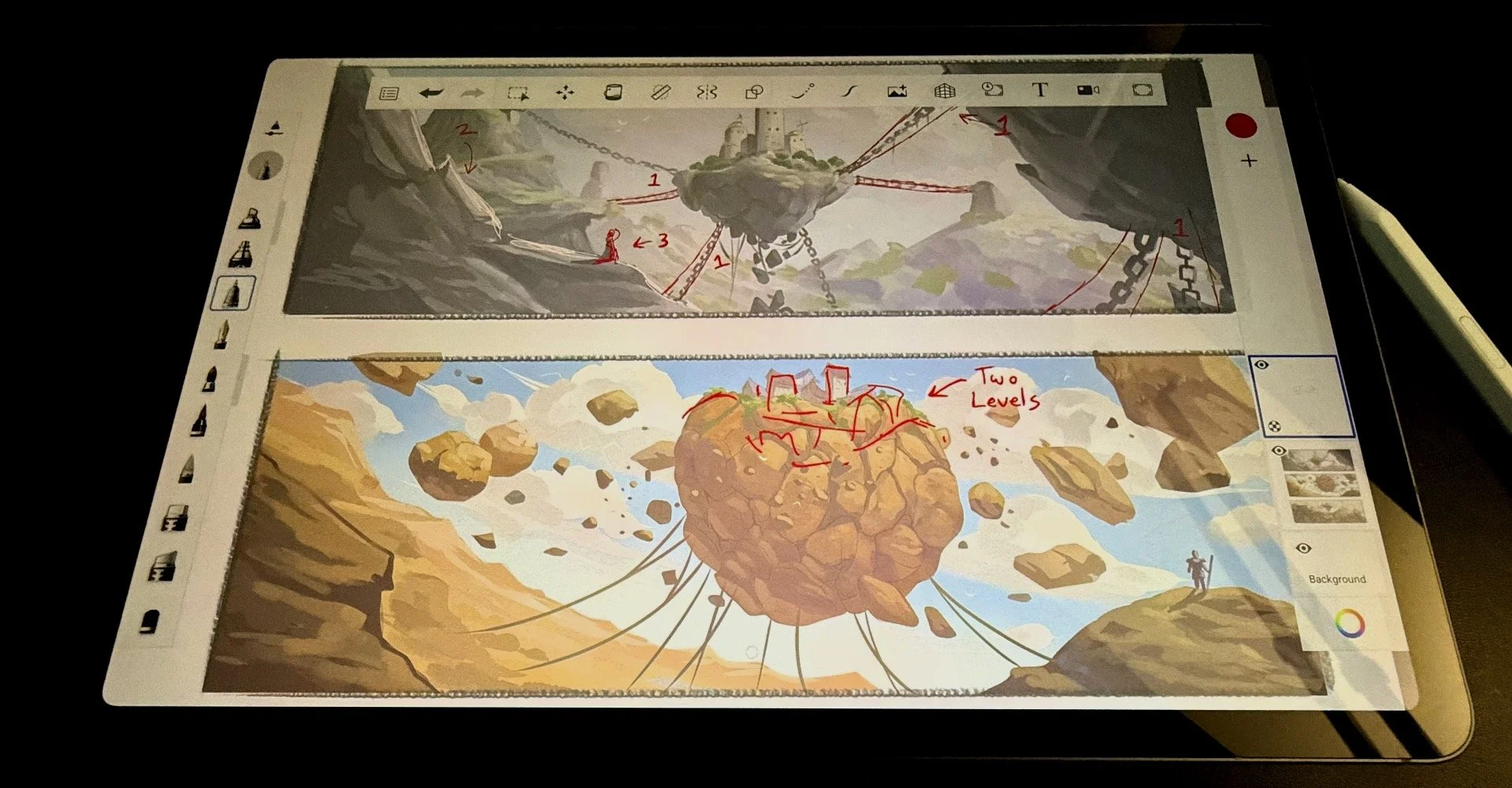
An art director may make mark-ups directly on top of the proposals to provide clear visual feedback to the artist.
Tips on feedback
As an artist you can invest a lot of time researching and thinking about the concepts you're creating. You know the reasoning behind all the choices you've made, so make sure to explain your thought process so the person reviewing your work hears the 'why' behind your choices.
Try not to take feedback personally. It's a collaborative process and everyone is contributing toward the best outcome for the project. Things can evolve quickly and changes can occur in other areas of the production that may impact what your art needs to show, so embrace the journey.
If you are working on a solo project, reaching out to friends and peers for feedback is equally important. It brings fresh eyes and a different perspective on your work. Getting another set of eyes on it can often shine a spotlight on issues you haven't noticed or considerations that you haven't thought of. Feedback can also provide an aha! moment and a new spark of excitement for you in the work.
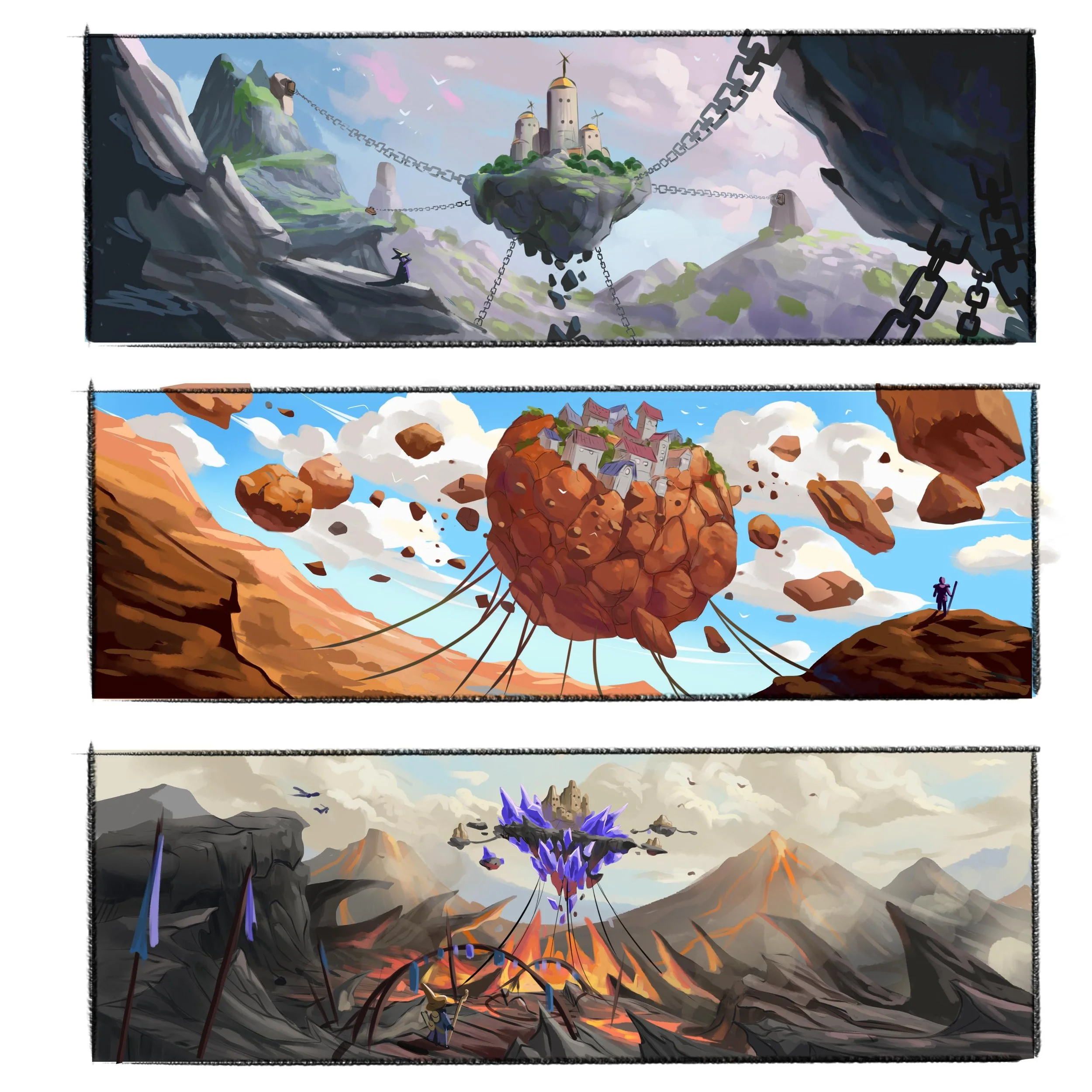
Artist updates the concepts integrating the feedback.
Takeaways
Concept art is visual problem solving. It can be one of the most fun and creative stages of a project where almost anything is possible - it’s the time you get to figure out what works and what doesn't.
It's also communication. It's a critical step to getting everyone involved in the project on the same page, and can help set up guidelines that last throughout the entire project. It represents the visual alignment of a project's ideas and goals, and it’s not a step to be taken lightly.